Investment Opportunity
Bruised Sky
A 20-minute British short thriller set in 1970s Essex. A night of revelry slowly shifts into betrayal and horror — shot on 16mm film.
The Story
A night that begins with promise ends in dread.
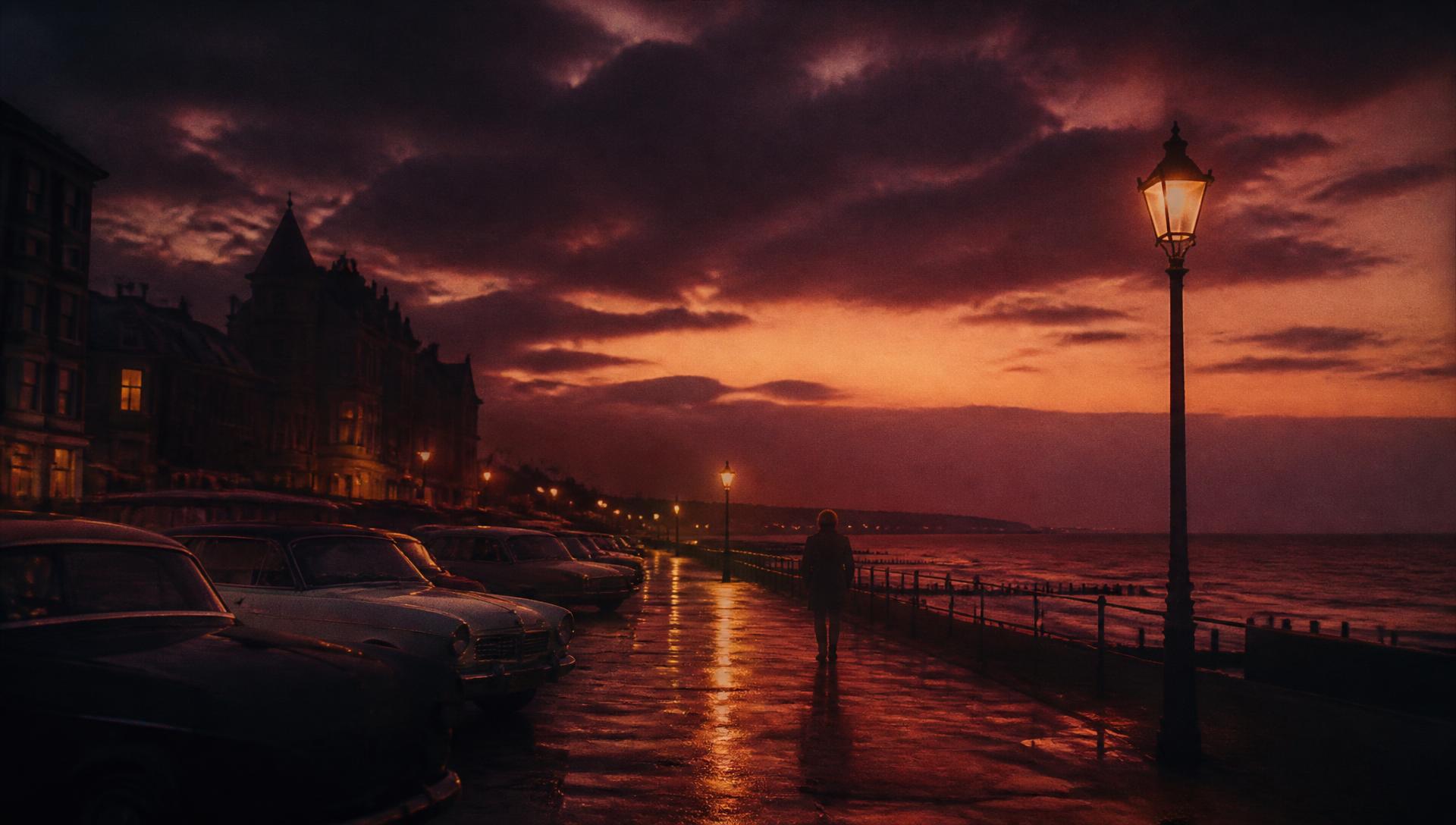
Bruised Sky is a 20-minute short thriller set in 1970s Essex. It follows a teenager lured into a night of revelry that slowly unravels into betrayal and horror. The film explores the tension between innocence and corruption, the warmth of a summer evening, and the chill of what waits beneath it.
Shot on 16mm film by cinematographer Peter Bishopp, the project is designed as a calling-card for the feature — a self-contained short with festival potential, strong genre appeal, and a clear path to a longer-form British thriller.
20-Minute Short Thriller
A tightly crafted narrative that builds tension from the first frame to the last.
1970s Essex
A period setting that evokes the raw texture of British seaside towns and their hidden secrets.
Shot on 16mm Film
Authentic celluloid cinematography by Peter Bishopp for a distinctive, cinematic look.
Experienced Team
Directed by Gary Kent and co-written with Michael Nolan, with a committed British cast.
Cast & Crew
The people behind the film
Starring
Geoff Bell
Starring
Che Bell
Starring
Nathan Mack
Starring
Nathan Buckland-Smith
Director & Writer
Gary Kent
Writer
Michael Nolan
Cinematographer
Peter Bishopp
Investment Opportunity
Partner with a distinctive British genre project.
We are inviting investors to join the production of Bruised Sky. Your support will fund the final shoot, post-production, festival submissions, and the path to a feature-length adaptation.
Short-to-feature strategy
A self-contained proof of concept designed to attract finance and distribution for the feature film.
Festival route
Targeted submissions to major British and international short film festivals.
Genre appeal
A period thriller with strong commercial hooks and award-friendly craft.
Express Interest
Join us as an investor
Leave your details and we will send you the pitch deck, budget, and production timeline.